Custom Software Development for Business Growth
Custom Software Development is a critical part of modern business growth in today’s digital-first economy. Companies rely on software to manage operations, serve customers, analyze data, and scale efficiently. While many organizations start with off-the-shelf tools, these solutions often fail to meet evolving business processes. That’s why custom software development is essential.
Custom software is built specifically for a business, team, or workflow. Unlike generic applications, it aligns precisely with your organization’s operations, providing flexibility, security, and scalability.
This approach is especially valuable for:
- Startups creating unique digital products
- SMEs optimizing internal workflows
- Enterprises managing complex systems
- Organizations needing secure, scalable software infrastructure
Since 2016, MEEK Technologies has delivered tailored software systems that solve real operational challenges. In this guide, you’ll discover:
- What is custom software development?
- Types of solutions available
- Key benefits and ROI factors
- The full development process
- Cost considerations
- How to choose the right development partner?
What is Custom Software Development?
It is the process of designing, building, deploying, and maintaining software tailored specifically to meet the unique needs of a particular organization or user group.
Unlike off-the-shelf tools, custom developed software is not built for the mass market. It is engineered around:
- Specific workflows
- Industry requirements
- Internal systems
- Business goals
How It Differs from Off-the-Shelf Software
Off-the-shelf software:
- Built for broad audiences
- Limited customization
- Subscription-based licensing
- Shared features for all users
Custom software:
- Built from scratch or heavily customized
- Owned or fully controlled by the business
- Designed for scalability
- Fully aligned with business objectives
When companies invest in developing custom software, they gain flexibility, integration capability, and long-term control over their digital ecosystem.
Ownership and Scalability
With custom solutions, businesses control:
- Features
- Data
- Security protocols
- Upgrade roadmap
This ensures the software grows alongside the organization rather than restricting it.
Types of Custom Software Solutions
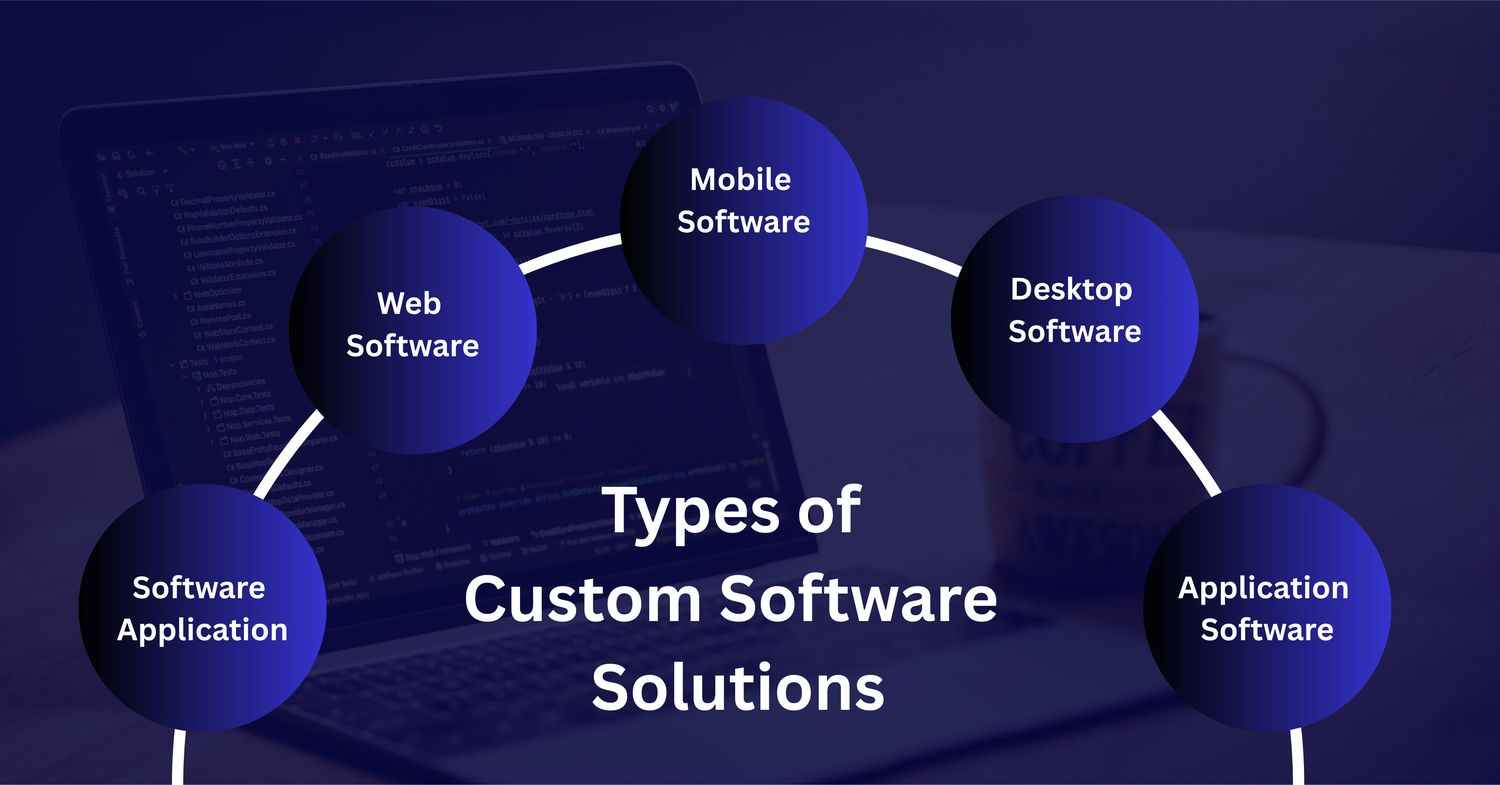
There are multiple forms of custom software development solutions, depending on business needs.
1. Custom Software Application Development
Custom software application development focuses on building applications tailored to specific business operations, such as Human Resource, Payroll, Accounting, Healthcare, New Idea transformation to automation, Vehicle Management, School Management, Students performance with Exam, Mobile App, ERP systems, CRMs, inventory management tools, workflow automation platforms or anything that has no ready product in market.
Use case:
- A logistics company building a route optimization system
- A healthcare provider developing a patient management platform
- An institution track the performance of its students
- A government organization digitalize the public services.
- Non-government organizations automate own office and engage stakeholders digitally.
2. Custom Web Software Development
Custom web software development involves browser-based systems accessible via the internet or intranet.
Examples:
- SaaS platforms
- Online booking systems
- Client dashboards
- E-commerce management systems
These systems allow remote access, centralized updates, and scalable infrastructure.
3. Custom Mobile Software Development
With growing mobile usage, custom mobile software development enables businesses to create native or cross-platform apps tailored to customer or internal needs.
Use cases:
- On-demand service apps
- Employee field service apps
- Mobile banking solutions
4. Custom Desktop Software Development
Custom desktop software development is ideal for organizations needing powerful, locally installed systems.
Common examples:
- Financial modeling tools
- Engineering software
- Internal analytics platforms
5. Custom Business Software Development
Custom business software development focuses on improving operational efficiency through automation, reporting, and system integration.
Examples:
- HR management systems
- Supply chain software
- Custom billing platforms
6. Custom Software Product Development
Some companies build software as a product. Custom software product development supports startups and product-focused businesses creating scalable digital products for market distribution.
7. Custom Application Software Development
This term broadly refers to custom application software development for specialized industry needs, compliance requirements, or advanced technical systems.
Benefits of Custom Software Development
Understanding the benefits of custom software development helps businesses evaluate long-term strategic value.
1. Scalability
Custom systems grow with your business. New features can be added without platform restrictions.
2. Enhanced Security
Tailored architecture reduces exposure to common vulnerabilities found in mass-market applications.
3. Seamless Integration
Custom systems integrate smoothly with:
- Payment gateways
- ERP systems
- CRM tools
- Third-party APIs
4. Competitive Advantage
One of the key business specific software advantages is differentiation. Your system reflects your unique processes, giving you an edge over competitors relying on generic tools.
5. Long-Term ROI
While initial custom software development costs may be higher, long-term savings emerge from:
- No recurring licensing fees
- Fewer workarounds
- Increased productivity
6. Performance Optimization
Custom software is optimized specifically for your business operations, improving speed, efficiency, and user experience.
Custom Software Development Process
A structured custom software development process ensures quality and predictability.
1. Discovery & Business Analysis
- Requirements gathering
- Stakeholder interviews
- Workflow analysis
- Feasibility assessment
This stage defines the scope and objectives.
2. Planning & Architecture
- System design
- Technology selection
- Database architecture
- Security planning
Strong architecture ensures scalability.
3. UI/UX Design
Design teams create intuitive interfaces that prioritize usability and user experience.
4. Development
Developers build features using appropriate programming languages, frameworks, and tools.
5. Testing & Quality Assurance
- Functional testing
- Security testing
- Performance testing
- User acceptance testing
This ensures reliability before launch.
6. Deployment
The software is launched in a live environment with proper configuration and monitoring.
7. Maintenance & Scaling
Ongoing updates, feature enhancements, and performance optimization ensure long-term success.
Custom Software Development Cost & Pricing
One of the most common questions is: how much does custom software development cost? There is no fixed price because every project differs.
Factors That Affect Custom Software Development Cost
- Project complexity
- Number of features
- Integration requirements
- Technology stack
- UI/UX sophistication
- Development team size
- Timeline urgency
- Post-launch maintenance
Why It’s a Long-Term Investment
Although custom software pricing can appear higher upfront compared to subscription tools, businesses gain:
- Ownership
- Reduced long-term licensing expenses
- Higher efficiency
- Strategic differentiation
Over time, custom solutions often deliver stronger ROI.
Custom Software vs Off-the-Shelf Software
|
Factor |
Custom Software |
Off-the-Shelf Software |
|
Flexibility |
Fully customizable |
Limited customization |
|
Ownership |
Business controlled |
Vendor controlled |
|
Cost Over Time |
Higher upfront, lower long-term |
Lower upfront, ongoing subscriptions |
|
Scalability |
Built to grow |
May require switching platforms |
|
Integration |
Tailored integration |
Often restricted |
For businesses with unique workflows, custom solutions provide long-term strategic value.
How to Choose the Right Custom Software Development Company
Selecting the right custom software development company is critical to project success.
Here’s what to evaluate:
1. Proven Experience
Look for a company with experience delivering similar projects across industries.
2. Portfolio & Case Studies
Review past work to assess technical capabilities and problem-solving expertise.
3. Technology Expertise
A strong custom software development agency should have expertise in:
- Backend technologies
- Frontend frameworks
- Cloud infrastructure
- DevOps practices
4. Transparent Process
Clear communication and structured workflows indicate professionalism.
5. Skilled Developers
Experienced custom software developers ensure code quality and long-term maintainability.
6. Post-Launch Support
Reliable custom software development services include maintenance, updates, and scalability planning.
Since 2016, MEEK Technologies has operated as a trusted customized software development company, delivering scalable systems tailored to business objectives. With expertise across development, IT staffing, and IT training, the company combines technical precision with strategic insight.
When evaluating custom software companies, focus on alignment, communication, and long-term partnership potential not just pricing.
Frequently Asked Questions
What is custom software development?
Custom software development is the process of designing and building software tailored specifically to a company’s unique requirements. Unlike off-the-shelf tools, it aligns fully with internal workflows, integration needs, and long-term business goals, offering greater flexibility and control.
How much does custom software development cost?
The custom software development cost varies depending on complexity, features, integrations, and team size. Simple systems may require moderate investment, while enterprise-grade platforms cost significantly more. Pricing reflects development time, technical requirements, and long-term scalability planning.
How long does it take to develop custom software?
Development timelines range from a few months for smaller applications to over a year for complex systems. The duration depends on scope, features, integrations, and testing requirements. A structured development process ensures predictable timelines.
Is custom software better than SaaS?
Custom software offers greater flexibility, ownership, and scalability. SaaS tools may be suitable for standardized needs, but businesses with unique processes often benefit more from tailored solutions that align precisely with operational goals.
Who needs custom software development?
Startups building digital products, SMEs automating workflows, and enterprises managing complex systems all benefit from custom solutions. Any organization with unique operational requirements or integration needs should consider custom development.
What technologies are used in custom software development?
Technologies vary based on project requirements. Common stacks include modern frontend frameworks, backend programming languages, cloud infrastructure platforms, databases, and DevOps tools. The technology choice depends on scalability, security, and performance goals.
What is the custom software development process?
The process includes discovery, planning, design, development, testing, deployment, and ongoing maintenance. Each phase ensures the software aligns with business objectives while maintaining quality, security, and scalability.
Conclusion
Custom software development is more than just building applications—it is a strategic investment in long-term growth, efficiency, and competitive advantage.
By choosing tailored solutions, businesses gain:
- Full control over their systems
- Greater scalability
- Enhanced security
- Stronger integration capabilities
- Sustainable ROI
MEEK Technologies has helped organizations design and implement scalable custom systems aligned with evolving business needs.
If you’re exploring digital transformation, the next step is evaluating whether a tailored solution aligns with your goals. You may also consider specialized service pages focused on startups, enterprise systems, or industry-specific solutions to deepen your strategy.
Custom software isn’t just about technology—it’s about building systems that grow with your vision.